
A New Path for Treatment-Resistant Conditions
Finding reliable relief from depression, anxious depression, OCD, addiction, or post-concussion symptoms can feel overwhelming, especially when traditional treatments haven’t delivered the results you hoped for.
For people struggling to find relief, Deep Transcranial Magnetic Stimulation (Deep TMS) is worth exploring. Designed to offer a medication-free and fast approach, it’s one of the most effective non-invasive therapies today for mental health.
By using focused magnetic pulses, Deep TMS stimulates deeper and broader areas of the brain than traditional TMS. The treatment is safe, comfortable, and FDA-cleared, with no downtime – a good choice for people who want results without changing their daily routine.
Key Takeaways
- Quick, Non-invasive Relief: Deep TMS is FDA-cleared for major depressive disorder (including anxious depression), OCD, and smoking cessation without surgery, sedation, or medication required.
- Targeted Technology: Using BrainsWay’s patented H-coil technology, this treatment reaches 4 to 6 centimeters into the brain, stimulating the deeper neural circuits linked to mood and behavior.
- Promotes Neural Healing: Deep TMS supports the brain’s natural chemistry by increasing neurotransmitters such as dopamine and serotonin and by boosting BDNF levels, encouraging neural healing and adaptability.
- Fits Your Schedule: Sessions are brief (typically 20 minutes), and because there’s no recovery time needed, you can return to your daily routine immediately after your appointment.
How Does Deep TMS Work?
You don’t have to do this alone
Talk with our team to understand your options and next steps.
Get SupportThe Science of Deep TMS
Deep TMS isn’t just a surface-level treatment, and the science behind it is fascinating. It targets the root of mental health challenges: the brain’s internal communication system.
Through a process called electromagnetic induction, deep TMS uses magnetic pulses to gently regulate the brain’s natural production of neurotransmitters.
You can think of this targeted stimulation as a “system reset,” encouraging the neural pathways to “communicate” with each other more effectively, leading to improved mood and mental stability.
Stimulating Deeper Brain Areas
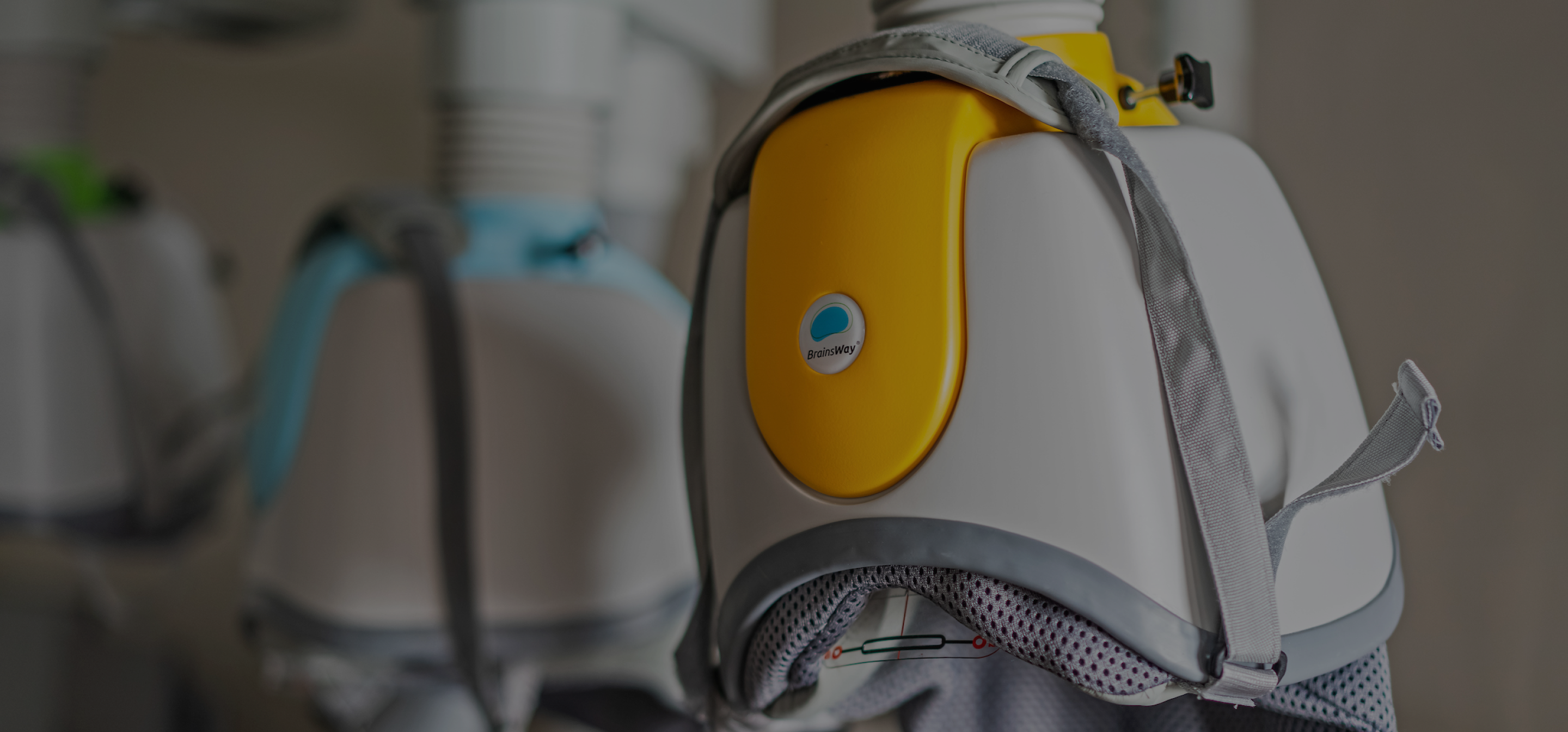
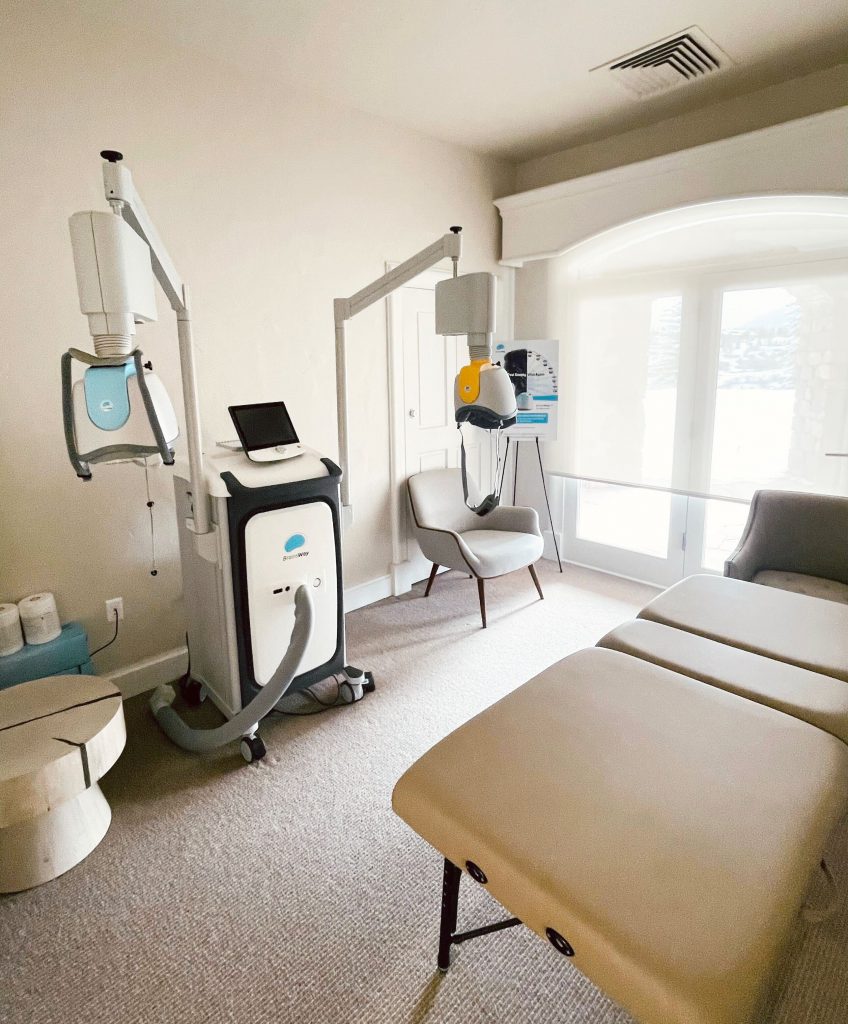
All Points North utilizes technology developed by BrainsWay, a global leader in Deep TMS innovation. Inside the specialized helmet lies their unique, patented H-coil.[1] This differs from the figure-8 coil used in traditional TMS. While traditional TMS can be a helpful treatment, it doesn’t specifically target the areas involved in mood regulation.
The main difference in Deep TMS is in its reach and results. The H-coil is designed to:
- Reach Deeper: It penetrates 4-6 centimeters into the cortex, reaching deeper brain structures (traditional TMS only penetrates about 1.5 centimeters).
- Target Stimulation: Deep TMS provides targeted stimulation with greater precision and focus on specific brain regions. Traditional TMS has a broader stimulation area with less focus.
Strengthening Neural Pathways
You may have heard of neuroplasticity, the brain’s natural ability to change, adapt, and reorganize itself in response to experiences, habits, and your environment.
The magnetic fields generated by the Deep TMS coil induce neuroplasticity more quickly. High-frequency pulses facilitate Long-Term Potentiation, which is like a workout for your brain cells. It strengthens the synapses (connections) between neurons, making them more responsive and resilient.
Conversely, low-frequency pulses can help calm overactive areas of the brain, like those associated with anxiety. Over time, this physical restoration helps establish healthier thinking patterns and emotional regulation.
Promoting Natural Healing
Beyond electrical signaling, Deep TMS starts a biological healing process. Chronic stress and depression can disrupt the brain’s communication patterns, leading to mental health challenges.
Deep TMS encourages the release of Brain-Derived Neurotrophic Factor (BDNF).[2] This restorative protein supports the repair and growth of synaptic connections, helping to return the structural harmony of critical brain regions that govern memory and emotion.
Restoring the Reward System
The brain’s “reward system” (the limbic system) regulates pleasure, motivation, and error monitoring. In individuals with conditions like OCD or addiction, this system is often out of alignment.
By reaching deep brain structures such as the anterior cingulate cortex, Deep TMS helps normalize dopamine release. When these neurotransmitter signals are balanced, it can become easier to regain control over compulsive behaviors, reduce the intensity of cravings, and find pleasure in healthy activities again.
Integration That Fits Your Lifestyle
Deep TMS is designed to fit into your daily routine, with each session approximately 20 minutes or less. While each client’s journey is unique, this efficient process allows you to plan your Deep TMS treatments around your other commitments, not the other way around. Scheduling varies based on the primary focus of treatment, the treatment plan, and the facility’s hours.
One of the biggest draws for Deep TMS is its non-invasive nature. It’s a well-tolerated, safe treatment option with no need for anesthesia or recovery time. Clients can drive themselves to and from each session and resume other activities immediately afterward.
Who Can Benefit from Deep TMS?
Deep TMS offers an alternative path to mental well-being beyond traditional protocols. Many clients who have not seen desired results with medication have seen improvement fromDeep TMS.
Currently, Deep TMS is an FDA-cleared treatment for the following conditions:
- Major Depressive Disorder (MDD)
- Anxious Depression
- Late-Life Depression
- Obsessive-Compulsive Disorder (OCD)
- Smoking Addiction
While current clearances focus on the above conditions, extensive global research explores the efficacy for a broader spectrum of neurological and mental health needs.
BrainsWay has validated treatments with promising results outside of the United States for:
- Bipolar Disorder
- Post-Traumatic Stress Disorder (PTSD)
- Schizophrenia
- Alzheimer’s Disease
- Autism
- Chronic Pain
- Multiple Sclerosis
- Parkinson’s Disease
- Post-stroke Rehabilitation
Preparing for Your Deep TMS Journey
Your treatment begins with a thoughtful pre-screening process, as safety and comfort are our highest priorities. You’ll meet with a licensed provider for an initial evaluation – a collaborative conversation where we seek to understand your psychiatric history, medical background, and wellness goals.
Transparency regarding your medical history is essential. It allows our team to curate the most appropriate protocol and ensure that Deep TMS aligns with your overall treatment plan.
Optimizing Your Deep TMS Experience
In the days leading up to your first Deep TMS treatment, we recommend the following preparations in the days leading up to your first Deep TMS session:
- Medication Consistency: Please continue your current medication regimen exactly as prescribed. Consistency is key, as it allows us to accurately map your brain’s typical functioning during your initial session.
- Prioritize Sleep: Rest plays a major role in your brain’s excitability. Prioritizing a peaceful night’s sleep before your sessions helps support the brain’s neural responsiveness.
- Mindful Consumption: Both caffeine and alcohol can influence the seizure threshold and how neurons react to stimulation. To maintain stability during your treatment, we suggest avoiding heavy alcohol use and keeping your morning coffee intake consistent throughout your treatment course.
Your First Appointment
Your first visit typically lasts a little longer – about 45 to 60 minutes – than the daily treatments to follow. This allotted time is necessary for our specialists to conduct your Motor Threshold Mapping alongside your first Deep TMS treatment.
The Science of Mapping
Before starting Deep TMS, you’ll have a specialized mapping session. This process is essentially a roadmap for your care that identifies your motor threshold. This determines the specific, gentle energy level required to activate the neural pathways associated with movement.
Because every individual’s neuroanatomy is unique, this mapping ensures that your Deep TMS sessions are precisely calibrated. By observing a subtle, involuntary response (such as a flick of the thumb), our specialists can determine the optimal stimulation level for the best treatment.
This approach ensures the magnetic fields are delivered at the ideal intensity to encourage neuroplasticity, creating a truly curated protocol for you.
Preparing for Your First Deep TMS Session
Ensure Your Hair is Clean & Dry
This is the most important step. Please come with clean, completely dry hair. Avoid using hair gel, mousse, sprays, or leave-in conditioners. These products can create a barrier between the H-coil and your scalp, making it harder for the machine to find the right spot.
Dress for Comfort
You’ll be sitting in a reclined treatment chair while our treatment experts take measurements. We suggest wearing comfortable clothing. Since the helmet straps under the chin, avoid high-collared shirts or bulky turtlenecks that might get in the way.
Remove Metal from the Head Area
You’ll need to remove earrings, facial piercings, hair clips, or glasses during the stimulation. You may be allowed to keep your wedding ring or watch on, as the magnetic field is focused strictly on the head.
Consider a Pre-Treatment Pain Reliever
While the treatment isn’t painful, it can take some getting used to. The gentle tapping sensation on the scalp may feel odd or cause mild scalp discomfort the first time.
If you’re prone to headaches, it’s fine to take an over-the-counter pain reliever like Tylenol or Ibuprofen about 30 minutes before your appointment to prevent discomfort.
Is Deep TMS Safe?
Deep TMS is a highly researched treatment modality, with its safety and effectiveness explored in over 60 clinical studies across various indications at leading global institutions.
In 2013, the first Deep TMS treatment received FDA clearance after demonstrating its potential to support individuals who hadn’t found relief through conventional methods. Today, the academic literature provides an educational framework for understanding its impact.
Supporting Individuals with Major Depressive Disorder (MDD)
Research indicates that a significant majority of participants – 75% of clients with MDD showed a notable clinical response.[3]
Additionally, 50% of clients struggling with MDD achieved remission from depression.[3]
Supporting Individuals with OCD
In a 2020 study involving over 200 participants, nearly 60% of those with OCD experienced a reduction in symptoms, with 70% of clients experiencing improvement after an average of 18.5 Deep TMS sessions.[4]
Further findings show that over 50% of those participants experienced sustained symptom improvement after an average of 20 sessions.[4]
Researchers discovered that focusing stimulation on “the medial prefrontal cortex and anterior cingulate cortex significantly improved OCD symptoms,” confirming the efficacy of Deep TMS.[5]
Understanding Risks and Side Effects of Deep TMS
It’s natural to have questions about what potential side effects a treatment may cause. Deep TMS is well-documented, and for many, the experience is described as gentle and manageable. And thankfully, the most frequently reported sensations are mild and temporary.
Common Observations
Some individuals report a slight, “transient” headache, similar to that experienced when wearing a snug headband for too long. These typically dissipate shortly after the session. Others may experience temporary sensitivity in the jaw or scalp where the headset rests.
Regarding the positive effects, some individuals have reported improved sleep quality and feeling more rested upon waking.
If you experience localized sensitivity, your provider can adjust the helmet’s tilt or have a licensed physician administer an over-the-counter pain reliever.
Safety Considerations
As a non-invasive technology, Deep TMS does not require any anesthesia or downtime. However, to ensure the highest standards of care, certain safety protocols are in place:
- Medical Devices: Deep TMS is not recommended for individuals with implanted electronic or magnetic medical devices in the head or body (except for standard dental fillings).
- Neurological History: A history of seizures is a primary contraindication for Deep TMS treatment.[6]
While it’s safe to undergo Deep TMS therapy alongside other medications and therapies, clients should be transparent with their provider to ensure these therapies and medications do not conflict with Deep TMS before starting treatment.
It is also important to consider that while there is a rare risk of seizures associated with all forms of TMS, this risk is less than or comparable to seizure rates experienced with antidepressant medication.[7]
A Proven Track Record of FDA Clearances for Deep TMS
Deep TMS has been thoroughly tested and has a strong record of FDA clearances.
- In 2013, deep TMS was cleared to treat adults with major depressive disorder who did not get relief from medication.[8]
- In 2018, deep TMS became the first non-invasive device cleared to treat obsessive-compulsive disorder, offering new hope to patients struggling with compulsive behaviors.[9]
- In 2020, deep TMS was cleared to help adults quit smoking by targeting addiction pathways in the brain.[10]
- Now in 2025, the FDA has expanded clearance to include adolescents ages 15 to 21 with depression. This offers families a safer alternative to medication for younger patients.[11]
Deep TMS Applications at APN
At All Points North, we believe that expanding the conversation about modern therapeutic modalities is essential to the evolution of mental health care.
APN offers Deep Transcranial Magnetic Stimulation with three helmet options, all with different coils. Each coil is uniquely designed to treat major depression, anxious depression, OCD, and smoking cessation.
Finding Relief with Deep TMS
Deep TMS is a one-of-a-kind, effective, non-invasive, refreshingly simple solution for several conditions that have been historically difficult to treat. After only a few short sessions, clients see a marked improvement.
Although it’s an ostensibly straightforward mechanism, a remarkable amount of research has gone into the H-coil technology pioneered by BrainsWay.
Whether you’re a client or healthcare provider, Deep Transcranial Magnetic Stimulation is sure to make waves in the medical field in the future.
Deep TMS is available at All Points North Lodge in Edwards, Colorado, and also at our new Concussion and Depression Center in Denver, Colorado. To learn more about Deep TMS and whether treatment is an option for you, call 970.591.6710 to speak with our team today.
Frequently Asked Questions
What is the difference between Deep TMS and traditional TMS?
Deep TMS differs from traditional TMS primarily in its ability to reach deeper brain areas. While traditional TMS uses a flat coil that stimulates only the brain’s surface, Deep TMS employs a patented H-coil design that penetrates 4-6 cm into the brain.
This allows for more effective treatment of conditions like depression and OCD, as it targets deeper regions associated with mood regulation and emotional processing, providing a more comprehensive therapeutic effect.
How long does a typical Deep TMS session last?
A typical Deep TMS session lasts about 20 minutes, making it a quick and convenient treatment option. Clients can expect to complete their sessions in less than 30 minutes, including preparation time.
This efficiency allows individuals to easily fit treatment into their daily schedules without significant disruption, making it an appealing choice for those seeking relief from mental health conditions.
Are there any long-term effects of Deep TMS treatment?
Research indicates that Deep TMS has positive long-term effects for many clients, particularly those with treatment-resistant conditions.
Studies show that a significant percentage of clients experience sustained symptom improvement even after completing their treatment sessions.
The therapy promotes neuroplasticity, helping establish healthier neural pathways that can lead to lasting changes in mood and behavior and contribute to overall mental wellness.
Can Deep TMS be used alongside other treatments?
Yes, Deep TMS can be safely used alongside other treatments, including medication and psychotherapy. Clients need to communicate openly with their healthcare providers about their current treatment plans to ensure there are no conflicts.
This integrative approach can enhance overall treatment efficacy, allowing clients to benefit from multiple therapeutic modalities simultaneously.
Is Deep TMS suitable for children and adolescents?
Deep TMS has shown promise for treating adolescents, particularly those aged 15 to 21, with depression. While it is FDA-approved for adults, recent expansions in FDA clearance indicate its potential for younger patients as well.
However, parents and guardians must consult healthcare professionals to determine whether Deep TMS is appropriate for their child’s specific condition and needs.
Reference
- BrainsWay. (n.d.). BrainsWay Deep TMS technology. Retrieved December 4, 2025, from https://www.brainsway.com/how-does-it-work/technology/
- Sun, Z., Jia, L., Shi, D., He, Y., Ren, Y., Yang, J., & Ma, X. (2022). Deep brain stimulation improved depressive-like behaviors and hippocampal synapse deficits by activating the BDNF/mTOR signaling pathway. Behavioural Brain Research, 419, 113709. https://doi.org/10.1016/j.bbr.2021.113709
- “Deep TMS Treatment for Depression.” BrainsWay, BrainsWay, 6 Jan. 2022, https://www.brainsway.com/treatments/major-depressive-disorder/.
- Roth, Yiftach et al. “Real-world efficacy of deep TMS for obsessive-compulsive disorder: Post-marketing data collected from twenty-two clinical sites.” Journal of Psychiatric Research vol. 137 (2021): 667-672. doi:10.1016/j.jpsychires.2020.11.009
- Carmi, Lior et al. “Efficacy and Safety of Deep Transcranial Magnetic Stimulation for Obsessive-Compulsive Disorder: A Prospective Multicenter Randomized Double-Blind Placebo-Controlled Trial.” The American Journal of Psychiatry vol. 176,11 (2019): 931-938. doi:10.1176/appi.ajp.2019.18101180
- BrainsWay. (n.d.). Are there any safety concerns or side effects related to Deep TMS therapy? Retrieved December 4, 2025, from https://www.brainsway.com/patients-faqs/are-there-any-safety-concerns-or-side-effects-related-to-deep-tms-therapy/
- BrainsWay. (n.d.). TMS therapy side effects. BrainsWay. https://www.brainsway.com/patients-faqs/tms-therapy-side-effects
- BrainsWay. Major depressive disorder treatment. Retrieved December 4, 2025, from https://www.brainsway.com/treatments/major-depressive-disorder/
- BrainsWay. (2018, August 19). BrainsWay receives first-ever FDA clearance of a non-invasive device for treatment of obsessive compulsive disorder. https://www.brainsway.com/news_events/brainsway-receives-first-ever-fda-clearance-of-a-non-invasive-device-for-treatment-of-obsessive-compulsive-disorder/
- BrainsWay. (2020, August 24). BrainsWay receives FDA clearance for smoking addiction in adults. news-release-details/brainsway-receives-fda-clearance-smoking-addiction-adults/
- BrainsWay. (2025, November 13). BrainsWay receives FDA clearance of Deep TMS™ as adjunct therapy for major depressive disorder (MDD) in adolescents aged 15 to 21.
- Deep TMS: Smoking Cessation Treatment – BrainWay. BrainsWay. https://www.brainsway.com/treatments/smoking-addiction/